

cropper
update
Global F & I Solutions  Powered by Global F & I Media 
update
  • Home
  • Categories
    • used car financing rates
    • used car loan rates
    • finance rate on used car
    • best used car financing rates
    • used car financing best rates
    • used car with financing
    • used car financing
    • low interest rate on car loan
    • value of my used vehicle
    • how to refinance auto loan
    • used car loan average interest rate
    • used car loan percentage rate
    • second hand car 0 finance
    • how to calculate auto loan interest
    • what are auto loan interest rates
    • used car financing interest rates
    • used car loan percentage
    • used car loan interest rates
    • what is a good car loan rate
    • what are car loan rates
    • used car finance for sale
    • used car interest rates current
    • typical car loan length
    • common car loan terms
    • Extra News
April 18.2025
3 Minutes Read

Subaru's Bold Step into Electric Vehicles: Unveiling the Trailseeker and Solterra

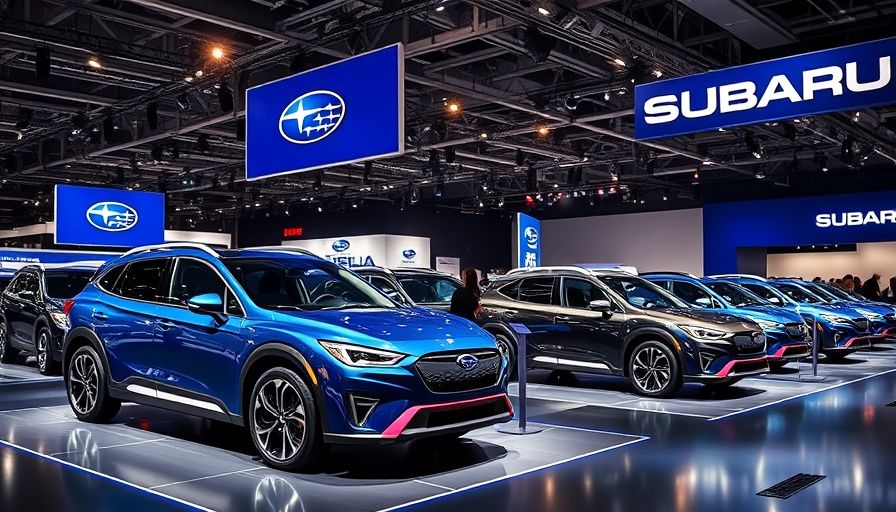
Subaru electric vehicles at New York Auto Show, vibrant showcase.

Subaru's Electric Future: Launch of Trailseeker and Updated Solterra

At the recent 2025 New York International Auto Show, Subaru Corporation announced the unveiling of two exciting battery electric vehicles (BEVs)—the 2026 Subaru Trailseeker and the updated 2026 Subaru Solterra. This marks a pivotal moment for Subaru as it enhances its electric lineup, catering to both everyday users and adventure seekers.

The Trailseeker: A Blend of Performance and Utility

The 2026 Trailseeker emerges as the newest addition to Subaru’s BEV portfolio, standing out as the brand’s second electric model. Designed with an adventurous spirit in mind, it promises exceptional driving performance intertwined with utility functionality. Boasting a rugged yet sleek exterior, the Trailseeker captures the essence of outdoor capabilities paired with the ecological advantages of a BEV. Its 74.7-kWh lithium-ion battery ensures impressive performance, offering over 260 miles on a single charge, making it suitable for long outdoor excursions.

Real-world practicality shines through with features optimized for charging in various climates, courtesy of its preconditioning system, allowing owners to embark on adventures anytime without worrying about range constraints. The generous cargo space is tailored for those who enjoy the outdoors, signaling Subaru's commitment to elevating the user experience.

Enhanced Solterra: Evolution in Electric SUV

The Subaru Solterra, which debuted as the brand's first-ever global BEV in 2021, also received significant updates. The 2026 model includes improvements that enhance efficiency, performance, and styling—reflections of Subaru’s dedication to innovation. Upgraded with a more powerful battery and motor, the Solterra now outputs 233 horsepower, showcasing a commendable 25% increase in driving range compared to its predecessor.

Despite these enhancements, Subaru remains attentive to user feedback, ensuring that the new Solterra aligns with customer preferences while maintaining the safety and dependability characteristic of the Subaru brand. With its refined interior design and advanced aerodynamics, the 2026 Solterra continues to embody the authentic SUV experience that Subaru promises.

The Broader Landscape of Electric Vehicles

Subaru's push into electric vehicles mirrors a larger shift in the automotive industry. As consumers increasingly lean towards sustainability, manufacturers are responding with innovative models that prioritize environmental impact without sacrificing performance or comfort. This trend is evident in the rising demand for BEVs, which is reshaping financing options and interest rates in the used car market.

For those in the dealership community, understanding the best used car financing rates becomes essential as electric models start to penetrate second-hand car markets. Consumers are searching for favorable used car loan rates, and statistics indicate that many car buyers are taking advantage of low-interest rates on auto loans. This presents a critical opportunity for dealerships to position themselves as knowledgeable advisors in providing financing options for prospective electric vehicle buyers.

Subaru’s Commitment to a Sustainable Future

As Subaru unveils the Trailseeker and updated Solterra, it emphasizes its long-term commitment to reducing carbon footprints and promoting environmentally-friendly practices. With future production of the Trailseeker slated for 2026, Subaru's roadmap outlines an ambitious trajectory towards sustainability that resonates with today’s eco-conscious consumers.

Car dealerships should also prepare for this transition by familiarizing themselves with used car financing options specific to electric vehicles. Understanding tools such as a used auto financing calculator can streamline the purchasing experience, helping customers make informed choices while maximizing their financial benefits.

As dealerships and automotive professionals navigate the evolving landscape of electric vehicles, the ability to adapt to shifting customer preferences and financing trends will be critical. Engaging customers with pertinent information about financing a car for 84 months or utilizing a used car loan calculator can significantly enhance their shopping experience and foster brand loyalty.

used car financing

8 Views

0 Comments

Write A Comment

*
*
Please complete the captcha to submit your comment.
Related Posts All Posts
07.07.2026

Why Model Validation Is Key to Fair Auto Lending Practices

Update Understanding the Importance of Model Validation in AI-Driven Auto Lending In the rapidly evolving landscape of auto lending, artificial intelligence (AI) is often touted as a game changer. It facilitates quicker approvals, enhances fraud detection, and ensures compliance, all dependent on one critical ingredient: the data fed into these systems. However, a closer examination reveals that while clean data is foundational, it is not sufficient to guarantee desirable outcomes. The missing piece? Model validation. The Role of Model Validation in Lending Model validation is a systematic process that financial institutions use to verify the integrity of their predictive models. According to longstanding guidance from banking regulators like the Federal Reserve and the Office of the Comptroller of the Currency, model validation involves several critical steps: validating the theoretical underpinnings of a model, testing its outputs against real-world data, and ongoing monitoring to ensure algorithm efficacy as market conditions change. This process emphasizes that having clean, comprehensive data alone does not guarantee fair lending practices. For instance, studies from the University of California, Berkeley revealed that even with advanced algorithms, significant racial disparities persisted in mortgage pricing, subjecting minority borrowers to excessive costs each year. Such findings raise a critical question: If the data input is sound, why do such discrepancies exist? The answer lies in the insufficient validation of the models themselves. Why Lenders Must Prioritize Model Validation The need for rigorous model validation is particularly pronounced in the auto lending sector, which faces increasing risks from fraudulent activities. Data from TransUnion indicates that fraud-related losses in auto loans dwarf those seen in credit card transactions, highlighting a crucial area of concern for lenders. Regulators have made it clear that the complexity of a model cannot be an excuse for noncompliance with fair lending laws. Auto lenders must provide clear, specific reasons for adverse credit decisions, regardless of whether those decisions come from a machine or a human. This obligation underscores why validation at all stages of model development and implementation is non-negotiable. Best Practices for Implementing Model Validation For dealerships, understanding and implementing robust model validation practices is crucial. This begins with developing a strong theoretical foundation for models and continually testing outputs against actual market outcomes to ensure accuracy. Regular audits and updates to models are also necessary to adapt to changing conditions and to rectify any biases that may arise. Moreover, utilizing calculators and tools aimed at improving the accuracy of interest rates on used car financing can bolster decision-making processes. This might include employing used car loan calculators to ensure consumers receive fair assessments of their eligibility and the rates applicable to them. Future Trends and Expectations As the landscape of auto lending continues to integrate more sophisticated technologies, the role of model validation will only grow. Lenders need to stay ahead by adapting these solutions not only for operational efficiency but also for compliance and ethical standards. With ongoing scrutiny regarding fairness in lending, the emphasis on validating the algorithms used in financial decision-making will also increase. Incorporating best practices in automated lending, from fraud detection to compliance, will become essential in enhancing consumer confidence and protecting against reputational risks. Conclusion: The Path Forward for Auto Lenders As dealerships embrace digital technology and AI, the importance of rigorous model validation cannot be overstated. It is the key to ensuring that auto lenders not only maximize efficiency but also uphold ethical lending standards. With the stakes so high, auto lenders must prioritize validation to ensure their technology serves all consumers equitably. For dealerships looking to refine their financing options, exploring tools like auto loan calculators can provide beneficial insights into used car interest rates and improve the transparency of financing strategies.

07.07.2026

Unpacking the Invisible Tax on Dealership Advertising: A Cost Analysis

Update The Hidden Costs in Automotive Advertising In the competitive landscape of automotive dealerships, where every dollar matters, dealership advertising takes on a new dimension. While the costs of traditional automotive advertising are often transparent, an insidious "invisible tax" is slowly impacting profitability without clear acknowledgment. This tax represents the additional expenses associated with advertising, such as inflated supplier costs, inefficiencies in marketing strategies, and the increasing reliance on digital platforms. Understanding the Invisible Tax As dealerships invest in marketing campaigns to drive traffic and generate sales, they must consider the layers of costs that extend beyond simple advertising fees. This 'invisible tax' includes not just the cost of running ads—whether on social media, search engines, or traditional media—but also the operational costs tied to ineffective advertising strategies and suboptimal vendor selection. These factors culminate in compounded expenses that can eat away at margins if not managed effectively. The Stakeholders Affected by Advertising Costs Dealership principals and general managers are particularly impacted by the invisible tax on advertising. The decision-makers must frequently navigate a complex web of advertising strategies, vendor claims, and performance metrics to gain competitive advantage. Moreover, fixed operations directors are tasked with maximizing service department revenues, which can directly correlate to the efficacy of the dealership's marketing efforts. If dealers do not have a firm grasp on how their advertising dollars are spent, or how efficient those expenditures are, they risk falling behind. In essence, reducing the invisible tax involves cultivating transparency within their ad spend processes. The Rise of Technology in Advertising Efficiency In recent years, advancements in digital marketing technology have reshaped how dealerships approach advertising. Leveraging data analytics tools can dramatically enhance the effectiveness of ad spend, allowing dealerships to pinpoint where and how their advertising is making an impact. For instance, using a used car loan calculator can not only help potential buyers assess individual offers but can also inform dealers about the demand for certain vehicle financing options, thus aligning advertisement strategies with customer interests. Future Predictions: The Evolving Landscape of Advertising As vehicle sales and financing continue to evolve, dealerships must adapt their advertising strategies accordingly. The emergence of artificial intelligence in customer targeting and consumer behavior analysis makes it possible for dealers to spend less while reaping greater rewards from their campaigns. By effectively harnessing these technologies, dealerships can mitigate the invisible tax while optimizing their advertising strategies. Call to Action: Demystifying Advertising Spend Dealerships should aim to gain clearer insights into their advertising budgets and the hidden costs associated with them. By regularly reviewing vendor contracts and performance metrics and by investing in new advertising technologies, dealerships can shield themselves from inefficient spending.

07.07.2026

The Rise of Used Car Fraud: Why Verification Starts Before Sales Begin

Update Understanding F&I Fraud: It Starts Earlier Than You Think Every dealership has faced the unsettling experience of a seemingly smooth transaction spiraling into chaos. A pristine credit application and clean payoff can still lead to complications when the title unveils the truth. Unfortunately, it's often too late for the sales team, having already invested significant time and emotional effort into what appeared to be a straightforward deal. According to Experian Automotive, nearly 90% of dealers are concerned about the rise in fraud, with a staggering 70% believing that it is intensifying. This doesn’t just affect reputation; identity fraud is directly linked to substantial inventory losses. In fact, about 48% of dealerships have reported the loss of four or more vehicles to identity fraud in the last two years alone. Furthermore, each fraudulent transaction can cost between $10,000 and $20,000, with insurance rarely covering the entire financial blow. The ensuing consequences include staff overload, delayed funding, and a compromised customer experience—issues that distract from the primary goal of closing clean contracts. The Role of AI in Modern Fraud The landscape of dealership fraud is evolving, significantly thanks to advancements in artificial intelligence. Fraudsters are now leveraging AI technologies to fabricate synthetic identities and vehicle documentation at a rapid pace. As reported by TransUnion, the threat posed by synthetic identities led to a record $3.3 billion in losses for U.S. lenders in 2024 alone. This sophisticated deception requires that dealerships remain vigilant as the tools to fabricate legitimate-looking documents have become increasingly accessible, complicating the verification process. Need for Rigorous Vehicle Verification To counteract the rise of synthetic identity fraud, the automotive industry is investing heavily in buyer verification systems. This includes comprehensive identity checks, credit reviews, and rigorous income verification. However, a significant gap remains between how buyers are vetted and how vehicles are scrutinized. Many dealerships continue to treat deeper vehicle checks as a back-office task, often leaving them until after the sale has been structured. This can unwittingly open doors to potential fraud that could be caught much earlier in the sales cycle. Strategies for Dealerships to Address Fraud It’s essential for dealerships to integrate title, lien, and registration verification into the lead-up to closing a deal, treating these checks as a core part of the sales process. Here are practical strategies: Prioritize Verification: Establish a protocol that checks title records before any trade is accepted or contracts are advanced. Train Staff: Equip your team with the knowledge needed to identify red flags in documents upfront. Training can significantly enhance detection rates. Utilize Technology: Invest in modern verifiable systems to stay ahead of fraudsters utilizing AI. Regularly Update Practices: Continually revise your verification practices in response to the evolving nature of fraud. The Road Ahead: Preparing for Future Fraud Challenges The landscape of automotive fraud will only become more complex as technology evolves. With AI becoming an increasingly potent tool for fraudsters, monitoring and enhancing security measures is paramount for dealerships. By shifting verification processes to the forefront and supporting them with the latest technologies, dealerships can better protect themselves from the costs associated with fraud and foster a more secure environment for transactions. In an industry where every transaction counts, remember that prevention starts long before the paperwork is completed. Proactive measures can safeguard not just the dealership's finances but also enhance the customer experience.

Terms of Service

Privacy Policy

Core Modal Title

Sorry, no results found

You Might Find These Articles Interesting

T
Please Check Your Email
We Will Be Following Up Shortly
*
*
*