

Add Row
Add Element
cropper
update
Global F & I Solutions  Powered by Global F & I Media 
update
Add Element
  • Home
  • Categories
    • used car financing rates
    • used car loan rates
    • finance rate on used car
    • best used car financing rates
    • used car financing best rates
    • used car with financing
    • used car financing
    • low interest rate on car loan
    • value of my used vehicle
    • how to refinance auto loan
    • used car loan average interest rate
    • used car loan percentage rate
    • second hand car 0 finance
    • how to calculate auto loan interest
    • what are auto loan interest rates
    • used car financing interest rates
    • used car loan percentage
    • used car loan interest rates
    • what is a good car loan rate
    • what are car loan rates
    • used car finance for sale
    • used car interest rates current
    • typical car loan length
    • common car loan terms
    • Extra News
February 27.2025
3 Minutes Read

Unlock the Secret to High-Impact Dealership Websites for Success

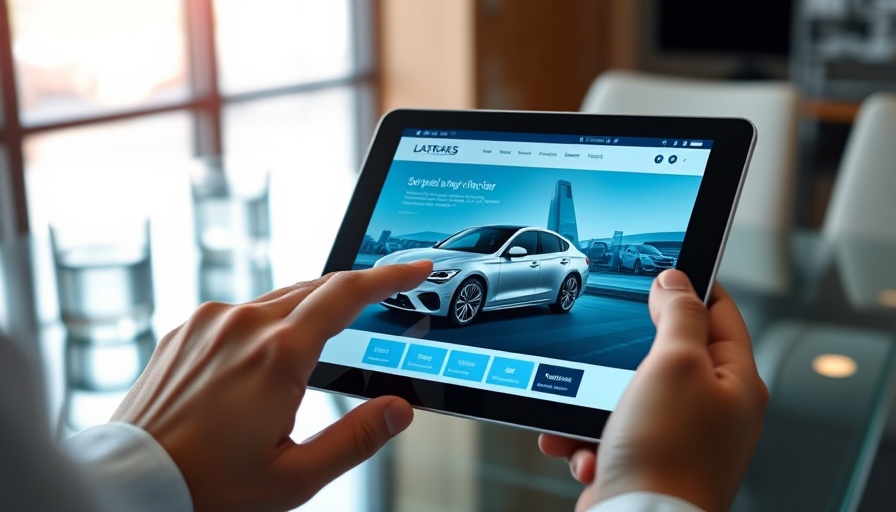
High-impact dealership website displayed on a tablet in an office setting.

Transforming Dealerships: The Necessity of a High-Impact Website

In our increasingly digital world, the online presence of a car dealership is not just an option; it’s a vital necessity. With 95 percent of car buyers commencing their journey online, it’s clear that a well-crafted dealership website can significantly influence consumer choices and ultimately drive sales. Dealerships must adapt to the profound shifts in the automotive market, ensuring that they meet the high expectations of today’s tech-savvy consumers.

Essential Features for Engaging Car Listings

At the core of a dealership's website is the vehicle listing. It’s crucial for these listings to stand out using high-quality visuals and detailed images, including 360-degree views, which enhance customer engagement and trust. Along with clear visuals, integrating advanced filtering options allows potential buyers to narrow their choices based on personal criteria such as price range, body style, or features. This convenience significantly improves the online shopping experience.

The Advantage of a Blog Section: Building Trust and Engagement

A dealership's blog serves as a powerful tool for relationship building with customers. By providing valuable content—such as car maintenance tips and detailed guides on financing—dealerships can establish themselves as trusted resources. This educational approach not only helps to guide buyers but also improves search engine optimization (SEO) and is more likely to attract organic traffic to the website.

Maximizing User Experience with AI Tools

Implementing innovative technology tools, such as AI chatbots, can significantly enhance user engagement on dealership websites. These chatbots can provide 24/7 support, answer questions about vehicles, financing, and scheduling appointments—all in real-time. The automation of these interactions ensures that potential buyers remain engaged and that leads are captured effectively.

Loan Calculators: Streamlining Financial Considerations

In the realm of used car financing, empowering customers with tools that calculate loan estimates can streamline their purchasing process. By integrating personalized financing calculators, dealerships can allow customers to explore finance options that fit their budgets seamlessly. This transparency in financial planning increases buyer confidence, ultimately leading to a higher likelihood of closing sales.

Social Proof: Leveraging Customer Testimonials

Another essential feature is incorporating customer reviews and testimonials on dealership websites. Positive feedback not only enhances the reputation of a dealership but also builds trust among potential buyers. By showcasing real experiences and satisfaction, dealerships can significantly sway indecisive buyers toward making a purchase.

Enhancing Operational Efficiency with Online Scheduling

Effective online scheduling systems are crucial for modern car dealership websites. Allowing customers to book appointments for test drives or service ensures that dealerships can better manage their resources while providing a convenient user experience. A well-designed scheduling system reduces the hassle often associated with booking appointments and increases the efficiency of both staff and customers.

The Importance of SEO Optimization

Given the competitive nature of the automotive market, having a website optimized for search engines is paramount. Beyond just engaging content, dealers must ensure that their site mobilizes SEO strategies effectively. Utilizing targeted keywords like “used car financing rates”, “low-interest car loans”, and “auto loan interest rates” can help attract more visitors, driving both awareness and conversion rates.

Conclusion: The Path Forward for Dealerships

As the automotive industry evolves, dealerships must embrace cutting-edge features to retain relevance in a digital-first age. Not only do these enhancements provide a superior experience for buyers, but they also position dealerships as forward-thinking leaders in customer service. The call to action is clear: invest in robust website features and engage your customers through innovation to thrive in today’s competitive market.

Extra News

7 Views

0 Comments

Write A Comment

*
*
Related Posts All Posts
12.12.2025

Marine Retailers Set Strategies Amid Conflicted Lender Views for 2026

Update Understanding the Mixed Signals in Marine Retail As 2026 approaches, marine retailers and lenders find themselves at a crossroads, each bringing a different perspective on the future of marine retail sales. While lenders express caution, fearing that high interest rates and low consumer confidence will hinder growth, marine retailers are taking a more optimistic approach. They are gearing up for a rebound as they analyze market opportunities and adjust their strategies accordingly. The State of the Market: Challenges and Opportunities Recent discussions highlight a dichotomy in outlooks. Marine retailers are investing in technology, improving customer experience, and shifting inventory management strategies to optimize sales channels. Meanwhile, lenders take a step back, emphasizing the ramifications of higher borrowing costs on consumer purchases. According to analysts, these conflicting sentiments stem partly from macroeconomic pressures that have left many dealers wary of impending financial headwinds. Insights from Industry Leaders: Preparing for 2026 As outlined in a recent article from Trade Only, the key to success in the upcoming year will not solely be surviving the turmoil, but actively preparing for it. Leaders in the marine retail space emphasize proactive measures: optimizing operations, adopting robust inventory management practices, and exploiting technology, such as AI, to maintain a competitive edge. Strategies that focus on creating customer trust and loyalty will be critical, ensuring that retailers are not just waiting for change but leading it. A Closer Look at Financial Expectations In stark contrast to retailers' ambitions, lenders foresee a flat market. OneWater Marine's forecast for total sales in 2026 ranges from $1.83 billion to $1.93 billion, with adjusted EBITDA reflecting cautious optimism amid ongoing market uncertainty. These expectations highlight a mixed sentiment within the marine industry—while some sectors show signs of resilience and growth, others remain tethered to cautious forecasts driven by economic instability. Long-Term Strategies to Navigate Conflict The successful dealers will be those willing to embrace change early rather than react to it late. The Marine Retailers Association of the Americas stresses the importance of refining processes and enhancing customer relations, which are pivotal in capitalizing on any future upswings in demand. By focusing on transparent marketing and nurturing customer loyalty, dealerships can better weather the challenges of the coming year. Your Roadmap as a Dealer As we inch closer to 2026, it’s vital for car dealership owners and general managers to remain adaptable. Continue honing your operations and processes, understand costs, enhance technologies, and prioritize engagements with customers. This preparation will provide a solid foundation for capitalizing on the evolving market landscape. The marine retail environment is undoubtedly fluctuating with challenges, but with the right decisions, it can also present substantial opportunities for those who are ready to act.

Terms of Service

Privacy Policy

Core Modal Title

Sorry, no results found

You Might Find These Articles Interesting

T
Please Check Your Email
We Will Be Following Up Shortly
*
*
*