

Add Row
Add Element
cropper
update
Global F & I Solutions  Powered by Global F & I Media 
update
Add Element
  • Home
  • Categories
    • used car financing rates
    • used car loan rates
    • finance rate on used car
    • best used car financing rates
    • used car financing best rates
    • used car with financing
    • used car financing
    • low interest rate on car loan
    • value of my used vehicle
    • how to refinance auto loan
    • used car loan average interest rate
    • used car loan percentage rate
    • second hand car 0 finance
    • how to calculate auto loan interest
    • what are auto loan interest rates
    • used car financing interest rates
    • used car loan percentage
    • used car loan interest rates
    • what is a good car loan rate
    • what are car loan rates
    • used car finance for sale
    • used car interest rates current
    • typical car loan length
    • common car loan terms
    • Extra News
May 09.2025
2 Minutes Read

Recent Dealership Acquisitions: What's Happening in the Automotive Market?

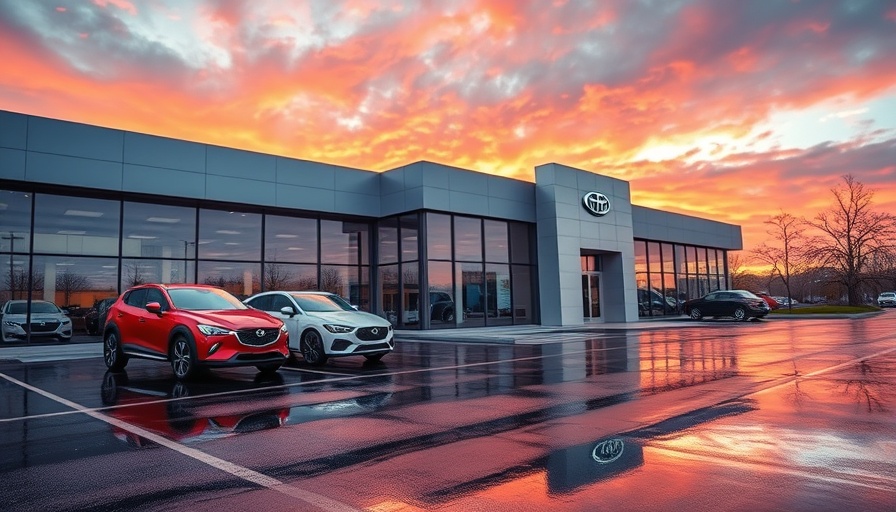
Modern car dealership at sunset showcasing used car financing rates

Recent Dealership Acquisitions: What's Happening in the Automotive Market?

The automotive industry is evolving rapidly, and the recent acquisitions involving Don Franklin Kia, Jerry Seiner Honda, and Patriot Hyundai of Bradley highlight this shift. The expansion strategies of these dealerships not only reflect their growth ambitions but also signal notable changes in the market landscape.

Growth Through Acquisitions

The acquisition of Martin Kia by Don Franklin Auto Group marks a significant milestone in the company's journey. Founded in 1985 by Cornelius A. Martin, this dealership had a storied history that transitioned smoothly to the next generation, showcasing a family-oriented business model that is increasingly rare in today’s fast-changing automotive market. This strategic acquisition signifies Don Franklin's commitment to broadening its footprint, now extending over 25 dealerships across Kentucky, and solidifying its position as a key player in the region's automotive industry.

Venturing into New Markets

Similarly, the acquisition of Ocean Honda by Jerry Seiner Auto Group, which marks their entry into California, showcases their ambition to diversify and expand their dealership portfolio. This move represents a bold step into new territory, further strengthening their brand and reach within the competitive automotive landscape.

Understanding Financing Options for Used Cars

As dealership dynamics evolve, understanding financing options becomes crucial for potential buyers. Those considering purchasing a used car often seek the best financing rates available. Currently, used car financing rates are competitive, but buyers should research used car loans rates, compare average interest rates, and utilize tools like a used auto financing calculator to determine what’s best for their financial situation.

The Current Market Environment

The acquisition activities of Don Franklin and Jerry Seiner emphasize more than just growth; they reflect a current trend of consolidation within the automotive sector. Dealerships are leveraging their strengths by merging resources, attracting a broader customer base, and improving efficiencies, all while navigating through fluctuating used car interest rates that affect consumer purchasing decisions.

Why This Matters to Dealership Principals and GMs

For dealership principals and GMs, staying informed about industry trends is essential for strategic planning. Understanding how to leverage financing options effectively can determine the success of their operations. Dealers must consider the implications of both market consolidation and financing innovations on their sales strategies, ensuring they can offer competitive financing options to meet customer needs. As the automotive landscape shifts, embracing flexibility and innovation will be key to staying ahead.

The Road Ahead for the Automotive Industry

The exciting acquisitions of Don Franklin and Jerry Seiner hint at a vibrant road ahead for the automotive market. As these establishments continue to expand and adapt, the industry's resilience is evident. For those in the automotive sector, an understanding of the changing landscape, including financing options like used car loan interest rates, will be essential in navigating the future.

Are you considering financing a used car? Explore your options, compare rates, and make informed decisions to maximize your purchasing power.

used car financing

14 Views

0 Comments

Write A Comment

*
*
Please complete the captcha to submit your comment.
Related Posts All Posts
04.06.2026

Navigating Automotive Challenges: Insights on Auto Body Repair from Ken Kuczwaj

Update Unpacking the Insights from Ken Kuczwaj's Discussion In the latest episode of The Big Idea Pod-Cast, episode 62, host Ken Kuczwaj dives into the evolving landscape of the automotive industry, focusing on key challenges and opportunities that car dealership owners, principles, and general managers must navigate. With a wealth of experience, Kuczwaj shares invaluable insights into the intricacies of automotive body repair, customer engagement, and the financial aspects of running a successful dealership.In 'The Big Idea Pod-Cast Epi. 62 – Ken Kuczwaj April 10 Fri at 3pm LIVE', the discussion dives into automotive body repair and its importance to dealerships, exploring key insights that sparked deeper analysis on our end. Why Automotive Body Repair Matters to Dealers Automotive body repair is not just a reactive service to post-accident scenarios; it's an essential component of customer satisfaction and retention. Kuczwaj emphasizes that maintaining relationships with quality automotive body repair shops enhances the overall customer experience. By offering reliable paint repair for cars and automotive body repair services, dealers can position themselves as one-stop shops for their clients, alleviating the burden of dealing with multiple service providers. Understanding Car Dent Repair Costs One of the critical topics Kuczwaj highlighted is the importance of understanding car dent repair costs. This knowledge is particularly crucial for car dealerships aiming to provide accurate auto body repair estimates. By offering competitive car body repair quotes online, dealerships can streamline their customer service process, allowing for better transparency and trust-building with their clientele. Leveraging Tools for Effective Auto Body Repair Kuczwaj suggests that investing in modern auto body repair tools can significantly affect service quality. High-quality car body repair tools not only speed up the repair process but also ensure better outcomes, appealing to customers looking for fast and effective services. Incorporating technology into auto body repair operations can thus become a competitive advantage for dealerships. The Future of Used Car Sales The used car market continues to evolve, with a growing trend toward online transactions. Understanding how to leverage digital platforms for used car sales is critical for modern dealerships. Kuczwaj stresses that being well-versed in the best used car sales websites can help dealers expand their customer base while managing inventory effectively. This shift emphasizes the necessity of aligning sales strategies with current digital trends. Preparing for Tomorrow's Automotive Challenges Kuczwaj's insights remind us that the automotive industry is in a constant state of flux. Dealers must not only engage in current trends but also anticipate potential challenges like fluctuating consumer demands and changes in auto repair technology. Building adaptable strategies will be key for future success. In conclusion, if you’re a car dealer looking to optimize operations and enhance customer satisfaction, understanding the dynamics of auto body repair and being proactive in your sales strategy are essential. For more information on how to bring these insights to fruition, visit Global Fan Solutions.

04.03.2026

Unlocking Sales Potential: Mastering Multi-Channel Marketing for Dealerships

Update Navigating the Digital Marketplace: Why Multi-Channel Marketing is Essential for Dealerships In today's rapidly evolving car market, dealerships face a unique challenge: meeting customers where they are. As research by CarGurus notes, a staggering 83% of consumers prefer utilizing digital platforms for their car-buying journey. Ignoring the power of multi-channel marketing could mean losing significant sales opportunities. This article outlines the fundamentals of multi-channel marketing, its critical importance, and actionable strategies for implementation. What is Multi-Channel Marketing? At its core, multi-channel marketing refers to the strategy of engaging potential car buyers across various digital platforms—from social media and email to search engines and texts. By ensuring consistency and connectivity across these channels, dealerships enhance their visibility and maintain a cohesive message that builds consumer confidence. Why is Multi-Channel Marketing Important for Dealerships? The benefits of adopting a multi-channel marketing approach are manifold. With consumers using multiple platforms throughout their buying journey, maintaining visibility is crucial. A coordinated marketing strategy fosters trust, as buyers encounter familiar messaging and pricing across channels. Additionally, a unified approach allows for a seamless transition from online research to in-store visits, potentially reducing the time it takes to convert interest into sales. Execution Checklist for Effective Multi-Channel Marketing To harness the full potential of multi-channel marketing, dealerships can follow this streamlined checklist: Website as the Hub: Ensure all marketing channels direct traffic to your website. Optimize the Visual Display Pages (VDPs) for speed and lead capture. Sync Inventory and Pricing: Utilize automated feeds to maintain consistent vehicle availability and pricing across channels. Define Channel Roles: Designate specific channels for different parts of the customer journey, such as utilizing Google for high-intent searches while employing social media for broader brand awareness. Automation for Customer Engagement: Implement trigger-based automations that respond to shopper behaviors, enhancing follow-up strategies. Synchronize Timing: Strategically control how often messages are sent to avoid overwhelming potential buyers. Monitor Shopper Behavior: Track engagement metrics to refine strategies and target messaging accurately. Test and Refine: Continually assess and adapt your messaging to improve results over time. Leveraging Technology: The Role of Automation As the landscape of multi-channel marketing becomes more complex, the role of automation has never been more critical. Automation tools enable dealerships to manage extensive campaigns more efficiently, providing unified messaging across all platforms. For instance, a potential buyer who engages with an ad on TikTok can be retargeted across other platforms, providing a consistent narrative that enhances the overall customer experience. Case Studies on Successful Multi-Channel Strategies For dealerships looking to implement effective multi-channel marketing, examining successful case studies can provide valuable insight. For example, a campaign that targets buyers posting on platforms like Facebook, Snapchat, and TikTok simultaneously has shown to yield higher engagement rates and conversions. New strategies, such as showcasing a 'Weekend Test Drive' event across multiple platforms, can create urgency and drive foot traffic into the dealership. Conclusion: The Future of Dealership Marketing The retail landscape for automotive sales is evolving, with consumers increasingly shopping online before visiting physical locations. Adopting a multi-channel marketing strategy is not merely a trend but a necessary action for dealerships aiming to stay competitive. By investing in comprehensive marketing tactics that utilize digital platforms effectively, dealerships can enhance visibility, build consumer trust, and streamline the purchasing process. It’s time for dealerships to embrace this shift and adapt their marketing strategies accordingly to cater to the modern car buyer.

04.03.2026

What Dealerships Must Know About AI Chatbots vs AI Sales Agents in 2026

Update AI Chatbots vs. AI Sales Agents: A New Era for Dealerships in 2026 The automotive industry has relied on chatbots for nearly a decade, providing a basic level of customer interaction when human resources fell short. However, as we move into 2026, the limitations of traditional chatbots have become increasingly apparent, paving the way for a new generation of technology: AI sales agents. Understanding how these two types of technology differ is crucial for dealerships aiming to enhance their customer service and sales strategies. Understanding Traditional Chatbots Chatbots function mainly on pre-set scripts, answering straightforward inquiries like dealership hours or inventory via keyword matching. This model, while functional to a degree, falls short when more nuanced interactions are required. For instance, when a browser seeks specific vehicle comparisons or financing options, chatbots can only respond with generic information or redirect them to human agents—if available. Thus, in scenarios where customer timing is key, such as after-hours queries, chatbots can lead to lost sales opportunities, leaving customers unsatisfied. The Transformative Power of AI Sales Agents Contrastingly, AI sales agents represent a paradigm shift, utilizing natural language processing and contextual understanding to engage with customers in a meaningful way. Imagine a potential buyer visiting your site late at night, stating, "I’m considering the Tucson and Santa Fe for my family of five. Which is better?" While a chatbot might merely share external links, an AI sales agent would analyze the customer's needs, lay out tailored comparisons, calculate financing estimates—accounting for trade-ins—and even schedule test drives—all autonomously. This not only streamlines the sales process but builds measurable rapport with potential customers, increasing the likelihood of conversion. Exploring Scenarios That Highlight the Differences To illustrate the performance disparity, let’s look at four real-world scenarios: Trade-in Conversations: When a buyer asks about the trade-in value via chatbot, they might only receive the promise of a follow-up. An AI sales agent, however, gathers vehicle specifics, assesses conditions, provides a valuation, and books an in-person appraisal for the morning—all while the customer is engaged. Language Requirements: A Spanish-speaking customer approaching the website may find chatbots unable to assist. An AI sales agent, on the other hand, seamlessly detects the language and conducts a full sales conversation in Spanish. Engagement with Browsers: Browsers exploring an EV section may receive a generic popup from chatbots, while AI sales agents provide context-sensitive nudges, such as inquiries about range or model comparisons. Complex Queries: Buyers seeking detailed comparisons face limited responses from chatbots. An AI sales agent presents comprehensive side-by-side analyses based on personal metrics, leading to productive discussions. The Future of Dealership Operations The growing emphasis on AI in automotive sales is not merely a trend but a necessity stemming from the need for personal, immediate customer interaction. As dealerships grapple with labor shortages and evolving customer expectations, the adoption of AI sales agents can offer solutions that automate sales processes and enhance customer experiences. Lessons From AI Agent Integration According to experts in AI technology, dealerships need to be aware of the expanding capabilities of AI agents: they can automate various back-end processes like audience segmentation and inventory management, thereby addressing common frustrations in dealership operations. An intelligent automation strategy can mitigate labor shortages and shift customer expectations, ultimately driving deeper engagement and higher sales. Conclusion: Embracing the Change In summary, traditional chatbots, while once groundbreaking, can no longer meet the complex demands of today's automotive customers. As we project into 2026 and beyond, incorporating sophisticated AI sales agents will be essential for maximizing dealership sales potential. Dealers must recognize and act upon the differences between these technologies to successfully navigate the evolving marketplace. If you’re a dealership principal or operations director, now is the critical moment to evaluate your technology stack and consider the tangible benefits of harnessing AI sales agents in your operations.

Terms of Service

Privacy Policy

Core Modal Title

Sorry, no results found

You Might Find These Articles Interesting

T
Please Check Your Email
We Will Be Following Up Shortly
*
*
*