

cropper
update
Global F & I Solutions  Powered by Global F & I Media 
update
  • Home
  • Categories
    • used car financing rates
    • used car loan rates
    • finance rate on used car
    • best used car financing rates
    • used car financing best rates
    • used car with financing
    • used car financing
    • low interest rate on car loan
    • value of my used vehicle
    • how to refinance auto loan
    • used car loan average interest rate
    • used car loan percentage rate
    • second hand car 0 finance
    • how to calculate auto loan interest
    • what are auto loan interest rates
    • used car financing interest rates
    • used car loan percentage
    • used car loan interest rates
    • what is a good car loan rate
    • what are car loan rates
    • used car finance for sale
    • used car interest rates current
    • typical car loan length
    • common car loan terms
    • Extra News
March 03.2025
3 Minutes Read

BYD's Global Production Network Expansion: What It Means for EV Growth

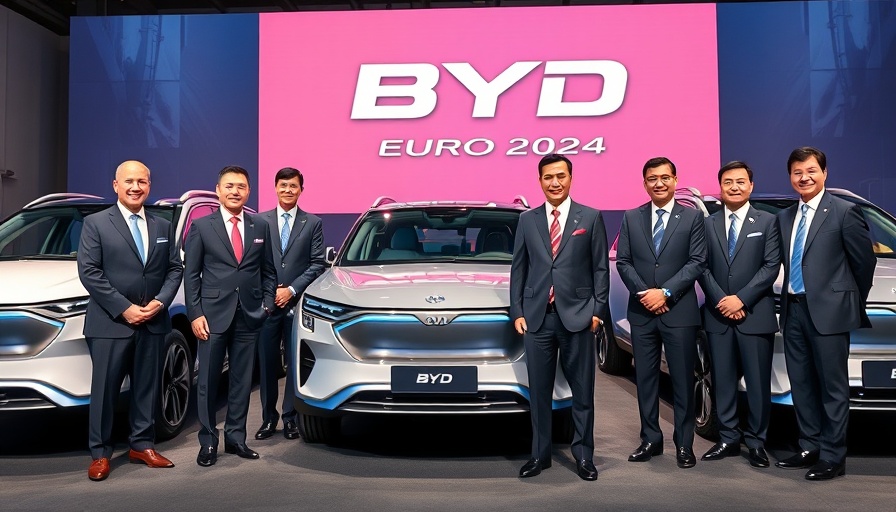
BYD global production network expansion event with executives and cars.

BYD's Global Production Network Expansion: What It Means for EV Growth

As the electric vehicle (EV) market continues to burgeon, BYD is swiftly making strides with its global production network, particularly in Europe, Asia, and Latin America. While the company's European factories have taken center stage, lesser-known expansions in regions like Brazil, Indonesia, Thailand, and Uzbekistan are equally noteworthy. These developments are not merely about increasing production capacity; they signify BYD's ambitious plans to dominate the global EV landscape amidst growing competition.

Understanding BYD's Ambitious Goals for 2025

BYD has set its sights on selling up to 6 million vehicles by 2025, a significant leap fueled by extensive factory expansions and a robust global market strategy. This target follows an impressive 20% growth in their sales projections, indicating confidence in their products and market demand. The company is deploying a mix of technological advancements and strategic partnerships to meet these goals, with dedicated production capacity earmarked for both domestic and international markets.

Broadening Horizons: The Indonesian Factory Impact

BYD's US$1 billion investment in its Indonesian factory aims to tap into a rapidly growing Southeast Asian market, projected to blossom with a compound annual growth rate (CAGR) of 16-39% between now and 2035. The completion of this factory by 2025 will enhance BYD's position in Indonesia while benefiting from lower production costs and closer proximity to emerging markets, fueling a more competitive pricing strategy on their EV offerings.

The Strategic Significance of Other Global Factories

While Europe has seen substantial investments, BYD's other factory developments must not be overlooked. Factories in Brazil and Thailand are set to contribute significantly to meeting local demand in the fastest-growing regions for EVs. These sites are crucial for BYD’s ambitious sales targets, as they cater not only to manufacturing needs but also to the concept of localizing production to enhance global supply chains amidst fluctuating international trade conditions.

Future Predictions for EV Market Expansion

As the competitive landscape continues to evolve, BYD's calculated expansion strategy is likely to yield positive results. Experts predict that by 2025, the demand for electric vehicles may exceed the current production capacities of many automakers. Hence, BYD’s proactive measures position the company advantageously in a market expected to see substantial growth. Furthermore, the enhancements in battery technology and autonomous driving capabilities will drive consumer interest, making BYD's offerings even more appealing.

Engaging with Local Communities and Employment Opportunities

The establishment of new factories brings with it vital economic opportunities for local communities. BYD's investments will likely generate numerous jobs in manufacturing and ancillary services, fostering local economies. This not only reinforces the company's commitment to corporate social responsibility but expands its customer base as communities engage with the brand more closely.

Challenges on the Horizon: Risks and Uncertainties

Despite the optimistic outlook, several challenges loom. Global recession threats, fluctuating market preferences, and supply chain interruptions pose risks that could hinder growth. Moreover, economic uncertainties in regions like Southeast Asia could impact sales, particularly if inflation and living costs rise significantly. Thus, BYD must navigate these challenges while keenly observing market dynamics and consumer behavior.

As the electric vehicle industry moves toward a pivotal juncture, evident in BYD’s multi-faceted approach, stakeholders must stay informed and adapt to these changes. Understanding the implications of such expansions is crucial for dealership principals, GMs, and fixed ops directors as they strategize for future developments in the auto financing landscape.

Call to Action: For further insights into financing options that best suit your purchasing needs, including understanding used car financing rates and options tailored for electric vehicles, consider exploring a used car financing calculator or reaching out to local dealerships for tailored advice.

Extra News

11 Views

0 Comments

Write A Comment

*
*
Please complete the captcha to submit your comment.
Related Posts All Posts
08.21.2026

Transform Your Dealership: How to Apply Automotive Training Effectively

Update Embrace the Action: Why Training Alone Won't Suffice In the fast-paced world of automotive sales, training is often touted as the golden ticket to success. However, as many F&I managers discover, simply attending courses is not enough. Despite automotive dealerships investing upwards of $1 billion annually in training—a staggering figure—the real challenge lies in the translation of knowledge into daily practice. In this ever-evolving market, the decision to apply what one has learned rests heavily on the mindset of each professional involved. Understanding the Disconnect Between Learning and Application Post-training surveys reveal a common thread among F&I professionals: the knowledge gained during training often fails to manifest in real-world application. Many cite reasons like a lack of time, discomfort in implementing new techniques directly with customers, or the absence of managerial support for changes. These obstacles highlight a mindset that values theoretical understanding over practical application. The Dangers of Perfectionism: A Barrier to Growth Another significant hurdle is the desire to feel 'ready' before taking action. This perfectionist mindset can prove to be a trap, delaying growth indefinitely. In reality, true progress occurs through trial and error; applying new skills typically involves navigating a messy learning process. It’s crucial for professionals in the automotive industry to recognize that no one feels entirely prepared when stepping into new territories. Cultivating a Growth Mindset Adopting a growth mindset is essential for those keen on transforming their business practices. This means moving past the fear of failure and embracing the discomfort associated with change. For many, the challenge is less about the training itself and more about the commitment to act on that training. Growth requires pushing through those initial barriers and accepting that discomfort can lead to significant growth and success. Practical Steps for Action: Turning Knowledge into Practice So what can dealership managers and F&I professionals do to bridge the gap between learning and doing? Here are a few actionable insights: Set Clear Objectives: Define what applying learned skills looks like in practice. Create measurable goals to track progress. Encourage Supportive Leadership: Cultivate an environment where managers actively support the implementation of new strategies. Foster a Culture of Learning: Encourage ongoing development and learning opportunities that prioritize action over academic perfection. Conclusion: It's Time to Take Action In conclusion, while automotive training is vital, the real transformation comes when professionals choose to act on what they have learned. For those in the dealership world, the journey towards applying newfound knowledge is fraught with challenges but ultimately rewarding. If you're ready to change your approach and embrace the action now, don't hesitate to seek further guidance. For more info call: (860) 707-9125.

08.20.2026

Unlock Greater Profits by Finding Efficiency in Fixed Ops

Update Understanding Fixed Operations Efficiency In the competitive automotive industry, car dealership owners and general managers are constantly on the lookout for ways to streamline their operations, especially in the fixed operations department. Fixed ops encompass service departments, parts, and accessories—all critical components that contribute significantly to a dealership’s profitability. Finding efficiency in these areas not only improves customer satisfaction but also boosts the bottom line. Boosting Profits Through Training A key strategy for improving efficiency in fixed ops is investing in specialized training for employees. The introduction of structured automotive training programs can elevate service quality and productivity. Consider automotive classes online that offer flexible learning options; these can help service advisors and technicians sharpen their skills without disrupting daily operations. A car training day at the dealership allows teams to engage hands-on, driving home the learning experience. Leveraging Digital Tools As the automotive industry transitions to more digital solutions, incorporating advanced technology into fixed ops becomes essential. Tools like automated online courses can streamline employee onboarding and reduce training time, allowing teams to be productive sooner. Moreover, utilizing digital business solutions for used cars can help dealerships manage inventory more effectively, ensuring that the parts and services that customers frequently need are readily available. Future Trends in Fixed Operations As we look ahead, auto F and I trends indicate a shift toward more transparent financing processes in fixed operations. By training staff on these practices, dealerships can improve their customer’s in-store experience—an essential factor for retaining clientele in today’s market. This is particularly relevant when getting familiar with subprime loans for cars, as understanding these options helps cater to a broader customer base. Measuring Success through Customer Satisfaction At the heart of any successful fixed ops improvement plan should be an unwavering focus on customer satisfaction. Implementing new systems and technologies should ultimately lead to faster service times and higher quality work, which can transform a dealership’s reputation. Satisfied customers are likely to return, increasing repeat business and referrals. Making Informed Decisions Car dealerships must stay on top of the latest trends and data in fixed operations to thrive in a rapidly changing marketplace. Understanding the nuances of automotive financing and the various loan options available can arm staff with the insights they need to guide customers effectively. By doing so, they can enhance the overall dealership experience. For more info on optimizing your fixed operations and enhancing your staff’s training, contact us at (860) 707-9125. Taking steps toward efficiency today will pay dividends tomorrow.

08.20.2026

How North America Can Compete with China's Automotive Speed

Update China's Automotive Dominance: The New BenchmarkThe automotive landscape is shifting dramatically with China leading the charge as the world's foremost automotive powerhouse. Recent discussions among leaders in the North American automotive sector have highlighted the urgent need to adapt and respond to the speed and scale of China's industry. As the Center for Automotive Research recently convened experts from the U.S. and Canada, they candidly assessed how North America must evolve to keep pace with China's innovative techniques and policies.Understanding 'China Speed'The phrase 'China Speed' has quickly become synonymous with rapid product development cycles, which are significantly shorter than those in North America. During the conference, leaders emphasized that simply imposing trade tariffs or other protectionist measures will not suffice. Instead, they recognized that a host of factors—including governmental support, a well-capitalized infrastructure, and advancements in digital development—have propelled China's auto industry to the forefront.A Call for Collaboration and InnovationOne key takeaway from the conference was a rallying cry for increased collaboration among industries. Participants proposed the utilization of artificial intelligence and machine learning to streamline and accelerate decision-making processes. By benchmarking against China's practices and embracing faster development cycles, they believe North America has the potential to harness its engineering talent and innovative capacity effectively.Strategic Focus Areas for North AmericaThe conference participants compiled a strategic plan aimed at addressing the competitive gap. This plan included several initiatives:Enhancing collaborative research in auto technologies and advanced manufacturing.Setting robust standards for cybersecurity and safety in connected vehicles.Continuing to develop strengths in software, engineering, and automation.Investing in regional innovation to create a more agile and responsive automotive ecosystem.Center President Elizabeth Krear highlighted that while North America possesses the foundational tools required for competitive equality, translating these strengths into tangible execution remains a challenge. Fostering an environment conducive to innovation may hold the key to competing not only with Chinese automakers but with industry shifts worldwide.The Digital Business TransformationMoreover, the trend towards a digital-first business approach is revolutionizing automotive dealerships. Car dealership owners can significantly benefit from automotive training centers and online courses that provide the latest insights into digital cars and auto sales training. By investing in automotive training online, dealerships can better equip their teams to navigate challenges posed by competitors.Final Thoughts: Taking ActionAs the automotive industry continues to evolve, staying informed and proactive is essential. Whether you're a dealership owner looking to expand your knowledge of subprime loans for cars or seeking advanced methods in auto F and I trends, the resources are available. For more information on automotive strategies and training solutions, don't hesitate to call (860) 707-9125.

cropper
update
WorldPulse News
cropper
update

Write a small description of your business and the core features and benefits of your products.

  • update
  • update
  • update
  • update
  • update
  • update
  • update

COMPANY

  • Privacy Policy
  • Terms of Use
  • Advertise
  • Contact Us
  • Menu 5
  • Menu 6

123 456 7890

AVAILABLE FROM 8AM - 5PM

City, State

1234, Building, Street, City, State, Country

ABOUT US

Write a small description of your business and the core features and benefits of your products.

© 2026 CompanyName All Rights Reserved. Address . Contact Us . Terms of Service . Privacy Policy

Terms of Service

Privacy Policy

Core Modal Title

Sorry, no results found

You Might Find These Articles Interesting

T
Please Check Your Email
We Will Be Following Up Shortly
*
*
*