

Add Row
Add Element
cropper
update
Global F & I Solutions  Powered by Global F & I Media 
update
Add Element
  • Home
  • Categories
    • used car financing rates
    • used car loan rates
    • finance rate on used car
    • best used car financing rates
    • used car financing best rates
    • used car with financing
    • used car financing
    • low interest rate on car loan
    • value of my used vehicle
    • how to refinance auto loan
    • used car loan average interest rate
    • used car loan percentage rate
    • second hand car 0 finance
    • how to calculate auto loan interest
    • what are auto loan interest rates
    • used car financing interest rates
    • used car loan percentage
    • used car loan interest rates
    • what is a good car loan rate
    • what are car loan rates
    • used car finance for sale
    • used car interest rates current
    • typical car loan length
    • common car loan terms
    • Extra News
July 09.2025
3 Minutes Read

Addressing the Vehicle Trade Imbalance: Challenges for U.S. Automakers

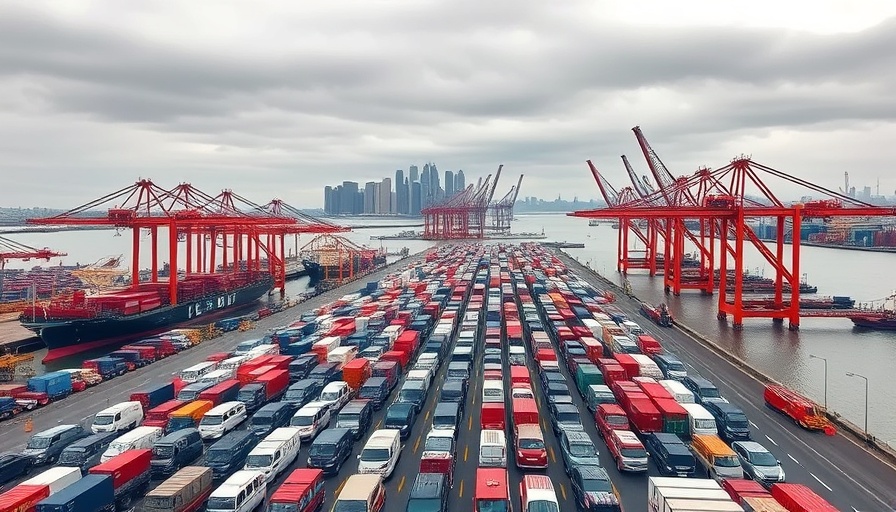
Expansive port scene highlights vehicle trade imbalance.

The Complex Landscape of Vehicle Trade Imbalance

The U.S. automotive industry is facing significant challenges as the trade imbalance grows, with a new report shedding light on the reasons behind this troubling trend. According to Jato Dynamics, a staggering 39% of new light vehicles sold in the U.S. last year were imported. This rate is the highest of any developed country, reflecting a stark contrast to the European Union, where only 26% of new vehicles were imported. This disparity highlights the ongoing struggle of U.S. automakers to compete in international markets while catering to local consumer preferences.

Understanding the U.S. Preference for Large Vehicles

In a nation where bigger is often considered better, U.S. automakers, particularly Ford and General Motors, have focused on producing large SUVs and pickups. These vehicles make up a substantial portion of sales in America, including 21% of new SUV sales last year. Yet, this focus on oversized vehicles is detrimental to competing effectively overseas, where consumers prefer smaller, more practical options. The EU, for instance, reported that only 2% of their SUV sales were for large models.

The effects of Strategy Adjustments on Automakers

This strategic emphasis on oversized vehicles has led to a decline in the competitiveness of domestic brands in international markets. While it has proven profitable domestically, the lack of diverse offerings creates gaps in appeal abroad. As discussed by Jato Global Analyst Felipe Munoz, "American carmakers have adjusted their operations to cater to domestic demand, but this has come at the expense of success in international markets." Consequently, Ford and General Motors have had to reduce their international operations, deepening the already significant trade imbalance.

Tesla’s Unique Position as a Global Player

Amid the gloomy narrative of American automakers, Tesla shines as an exception. Having established a notable international presence, Tesla's vehicles are in demand around the globe. However, recent challenges, such as backlash against its leading shareholder Elon Musk, indicate that maintaining this success requires continual adaptation. Munoz points out that without a focused effort to develop vehicles that meet varied global preferences, this trade imbalance is likely to persist.

Future Trends in Automotive Manufacturing

The emerging question is: how can U.S. manufacturers pivot their strategies to address this imbalance? KPMG’s insights suggest that gaining traction in global markets will involve innovation in vehicle design and functionality. Embracing smaller configurations and modernizing product lines to align with international consumer preferences are crucial steps that manufacturers must take.

Conclusion: A Call to Action for American Automakers

The U.S. automotive industry stands at a crucial crossroads, one that will require decisive action to bridge the gap in the trade imbalance. Dealers and manufacturers alike must prioritize aligning their offerings with both domestic and international demands to enhance competitiveness. Educating teams through automotive training centers may also be a vital step in embracing this new era.

For more information or to discuss strategies for adapting to the changing automotive landscape, call: (860) 707-9125.

Extra News

19 Views

0 Comments

Write A Comment

*
*
Please complete the captcha to submit your comment.
Related Posts All Posts
04.06.2026

Transform Your Dealership: Insights on Winning in Automotive Leadership

Explore Leadership in Automotive Industry and modern strategies for enhancing customer experience and operational efficiency in dealerships.

04.03.2026

Ed Morse Automotive Group Expands with Strategic Purchase of Porsche Des Moines

Update Ed Morse Automotive Group Expands Its Footprint in Iowa The automotive industry is buzzing with excitement as Ed Morse Automotive Group makes a strategic acquisition, purchasing the Porsche Des Moines dealership, the only Porsche outlet in Iowa. This acquisition not only marks an important milestone for Ed Morse but also enhances the dealership landscape in the region. A Strong Partnership for a Smooth Transition Pinnacle Mergers & Acquisitions played a pivotal role in facilitating this transaction, showcasing their expertise in guiding complex dealership deals. CEO Bill Scrivner emphasized the importance of building relationships for successful outcomes. "It’s a privilege for us to complete this deal with the Ed Morse team," he stated, highlighting the collaborative effort that made the acquisition possible. Inside the Porsche Des Moines Dealership Founded less than a year ago, Porsche Des Moines features a state-of-the-art facility encompassing an 11,000 square foot showroom and a 12,000 square foot service bay. Randy Hoffman, COO of Ed Morse Automotive Group, expressed enthusiasm about the quality of service at the dealership, noting how its well-established reputation made it an attractive addition to their family of dealerships. The Future of the Automotive Business in Iowa With this acquisition, Ed Morse now operates a total of five dealerships in Iowa, complementing its extensive network of 59 locations across the United States. Teddy Morse, chairman and CEO, expressed appreciation for the vibrant culture of Iowa and the potential to contribute to the local community through enhanced automotive services. Understanding the Dealership Dynamics This purchase reflects broader trends in the dealership market, where consolidation continues to take place. According to industry research, the rate of dealership transactions is increasing, driven by strong demand from buyers looking to expand their operations and boost their market presence. As Ed Morse solidifies its hold in Iowa, they set an example for other dealerships contemplating similar moves. Impact on Customers and Dealership Employees What does this acquisition mean for customers? For current Porsche enthusiasts, the continuity of the Porsche Des Moines name ensures that they will continue to receive the exceptional level of service they have come to expect. Meanwhile, the employees of the dealership will benefit from the resources and support offered by a larger automotive group known for its commitment to excellence. Your Next Steps: Finding the Best Used Car Financing Rates As dealerships like Porsche Des Moines evolve under new ownership, consumers looking to purchase or finance a used vehicle should stay informed about current financing options. Evaluating used car financing rates could lead potential buyers to discover competitive rates, enabling them to make smarter purchasing decisions. For those interested in understanding the financing landscape, tools like a used car loan calculator can provide valuable insights into how to approach financing. Knowing the average interest rates for used car loans, along with current offers for low-interest rates, can greatly enhance your buying experience. As the automotive sector continues to shift, staying updated with the latest news about financing options and dealership dynamics will empower buyers and ensure they make informed decisions.

04.02.2026

Strengthening Your Dealership Team: Building Resilience in 2026

Update Embracing Resilience: The Future of Auto Dealership TeamsIn the fast-paced world of automotive sales, building a resilient dealership team is no longer just a good practice—it’s a necessity. With unpredictable market behaviors and rapidly changing consumer expectations, the key to success lies in how dealerships adapt and strengthen their team dynamics. In 2026, resilience will be a cornerstone of operational strategies, directly impacting customer experience (CX) and, ultimately, revenue.Understanding Team Resilience in Today’s Automotive LandscapeResilience, defined as the ability to withstand and recover from challenges, extends beyond individual employees to the team as a whole. As highlighted in recent studies, including TTEC’s CX Trends 2026 report, the automotive industry is currently navigating a complex environment filled with disruptions like supply chain issues, cyber threats, and a surge in electric vehicle ownership. Dealerships that prioritize resilience and invest in their teams’ capabilities will be better equipped to handle these challenges, turning potential setbacks into opportunities for growth.The Importance of Clear Communication and LeadershipA resilient dealership thrives on clear communication and intentional leadership. It’s crucial for leaders to foster an environment where team members feel empowered to voice their concerns and contribute ideas. As emphasized by Assurant, proactive leadership involves providing continuous training to equip employees with the necessary skills to tackle current and future demands in automotive sales. Automotive training programs, including online courses and workshops focused on auto sales training and staff development, are essential for maintaining competitive edge and operational agility.Adapting to Fast-Paced Changes with TrainingAs the market evolves, so too must the skill sets of dealership teams. Regular automotive training and access to automotive classes online are critical in ensuring employees stay updated with the latest trends and technologies. Implementing car training days, where staff engage in hands-on learning experiences, can help integrate these lessons into daily operations. Such training not only enhances employee confidence but also increases team cohesion, laying the groundwork for improved customer interactions and satisfaction.Leveraging Technology to Enhance ResilienceThe role of technology has never been more significant. Dealerships must leverage digital tools to foster resilience within their teams. From automated online courses for flexible training to integrated systems that enhance communication, the right technological investments can streamline operations and improve response times to customer queries. A focus on digital business cars and connected services will prepare teams for the complexities associated with new vehicle offerings.Conclusion: Building a Future-Focused Dealership TeamIn conclusion, the way forward for auto dealerships hinges on resilience—both in team dynamics and customer experience. By emphasizing effective leadership, continuous training, and technological integration, dealerships can not only navigate the uncertain landscape of 2026 but thrive within it. For more information on enhancing your dealership’s resilience and training opportunities, call: (860) 707-9125.

Terms of Service

Privacy Policy

Core Modal Title

Sorry, no results found

You Might Find These Articles Interesting

T
Please Check Your Email
We Will Be Following Up Shortly
*
*
*